
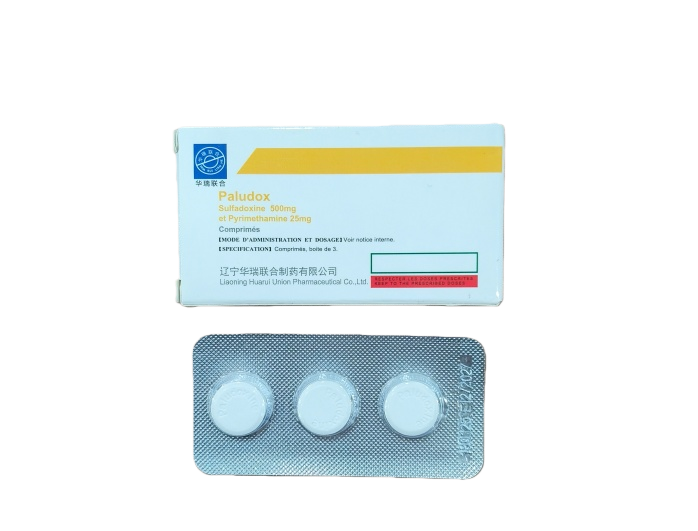
Pyrimethamine is an antiparasitic drug. It prevents the growth and reproduction of parasites. Sulfadoxine is a sulfa drug that fights bacteria in the body. The combination of pyrimethamine and sulfadoxine is used to treat malaria, a disease caused by parasites. Parasites that cause malaria typically enter the body through the bite of a mosquito. Malaria is common in areas such as Africa, South America, and Southern Asia. Pyrimethamine and sulfadoxine is usually given when other anti-malaria medications may not be as effective in treatment or prevention.
Indication:
Treatment of Toxoplasmosis: Pyrimethamine is used for the treatment of toxoplasmosis when used conjointly with a sulfonamide, since synergism exists with this combination.
Treatment of Acute Malaria: Pyrimethamine is also used for the treatment of acute malaria. It should not be used alone to treat acute malaria. Fast-acting schizonticides such as chloroquine or quinine are used and preferable for the treatment of acute malaria. However, conjoint use of Pyrimethamine with a sulfonamide (e.g., sulfadoxine) will initiate transmission control and suppression of susceptible strains of plasmodia.
Chemoprophylaxis of Malaria: Pyrimethamine is used for the chemoprophylaxis of malaria due to susceptible strains of plasmodia. However, resistance to pyrimethamine is prevalent worldwide. It is not suitable as a prophylactic agent for travelers to most areas.
Sulfadoxine is a long acting sulfonamide used for the treatment or prevention of malaria.
Sulfadoxine is used in combination with pyrimethamine for the treatment or prevention of malaria. It can also be used to treat various infections in livestock as well. Sulfadoxine and pyrimethamine is indicated for the treatment of Plasmodium falciparum malaria in those patients in whom chloroquine resistance is suspected.
Pyrimethamine and sulfadoxine is also used to associated treatment for these conditions: Plasmodium Infections, Toxoplasmosis, Acute MalariaPlasmodium Infections
Usage:
Usual Adult Dose for Malaria:
2 or 3 tablets taken orally as a single dose, following a 3 to 7 day course of quinine (650 mg every 8 hours).
Usual Adult Dose for Malaria Prophylaxis:
1 tablet orally every week beginning 1 or 2 days before departure to an endemic area; continue administration during the stay and for 4 to 6 weeks after returning.
Alternative: 2 tablets every 2 weeks beginning 1 or 2 days before departure to an endemic area; continue administration during the stay and for 4 to 6 weeks after returning.
Usual Adult Dose for Pneumocystis Pneumonia Prophylaxis:
1 tablet (25/500 mg) orally once or twice a week.
Pyrimethamine-sulfadoxine is generally not recommended for PCP prophylaxis unless trimethoprim-sulfamethoxazole, pentamidine, dapsone/pyrimethamine/leucovorin, atovaquone, or dapsone cannot be used.
Usual Pediatric Dose for Malaria:
2 months:
5-10 kg: One-half tablet orally one time
11-20 kg: 1 tablet orally one time
21-30 kg: 1.5 tablet orally one time
31-45 kg: 2 tablets orally one time
>45 kg: 3 tablets orally one time
A 3 to 7-day course of quinine should precede the pyrimethamine-sulfadoxine dose.
Usual Pediatric Dose for Malaria Prophylaxis:
> 2 months:
5-10 kg: 1/4 (0.25) tablet orally once a week
11-20 kg: 1/2 (0.5) tablet orally once a week
21-30 kg: 3/4 (0.75) tablet orally once a week
31-45 kg: 1 tablet orally once a week
>45 kg: 1.5 tablet orally once a week
Begin 1 or 2 days before departure to an endemic area; continue administration during the stay and for 4 to 6 weeks after returning.
Interaction:
The following drugs can interact with pyrimethamine and sulfadoxine. Tell your doctor if you are using any of these:
chloroquine (Aralen); or
sulfa drugs (Bactrim, Gantanol, Septra, and others);
This list is not complete and there may be other drugs that can interact with pyrimethamine and sulfadoxine. Tell your doctor about all your prescription and over-the-counter medications, vitamins, minerals, herbal products, and drugs prescribed by other doctors. Do not start a new medication without telling your doctor.
Side effects:
Get emergency medical help if you have any of these signs of an allergic reaction: hives; difficulty breathing; swelling of your face, lips, tongue, or throat.
Stop using pyrimethamine and sulfadoxine and call your doctor at once if you have any of these serious side effects:
the first sign of any skin rash, no matter how mild;
a severe blistering, peeling, and red skin rash;
pale skin, easy bruising or bleeding;
feeling tired, weak, or dizzy;
hallucinations, seizure (convulsions);
urinating less than usual or not at all;
jaundice (yellowing of the skin or eyes); or
fever, chills, sore throat, swollen tongue, joint pain, cough, feeling short of breath.
Less serious side effects may include:
mild stomach pain, feeling full;
slight hair loss;
headache;
muscle weakness;
depression, nervousness;
ringing in your ears; or
sleep problems (insomnia).


