
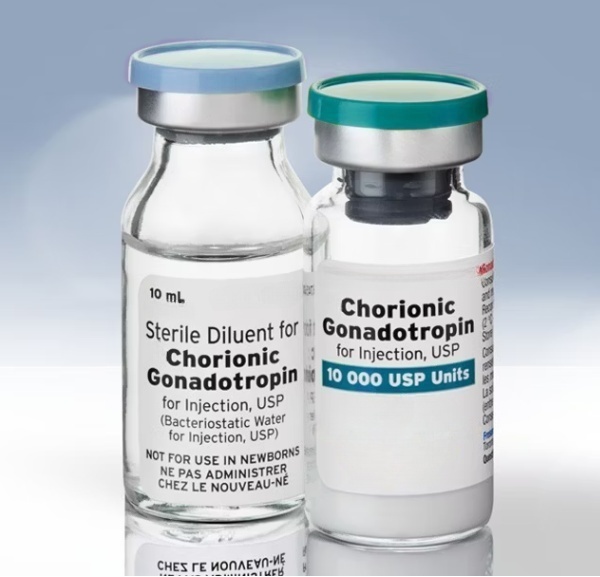
Chorionic gonadotropin is a hormone that supports the normal development of an egg in a woman's ovary, and stimulates the release of the egg during ovulation.
Chorionic gonadotropin is used to cause ovulation and to treat infertility in women, and to increase sperm count in men. It is also used in young boys when their testicles have not dropped down into the scrotum normally. This can be caused by a pituitary gland disorder.
Chorionic gonadotropin may also be used for other purposes not listed.
Strength:
500 IU
2,000 IU
3,000 IU
5,000 IU
Use Chorionic gonadotropin exactly as prescribed by your doctor. Do not use it in larger amounts or for longer than recommended. Follow the directions on your prescription label.
Chorionic gonadotropin is given as an injection under the skin or into a muscle. Your doctor, nurse, or other healthcare provider will give you this injection. You may be shown how to inject your medicine at home. Do not self-inject this medicine if you do not fully understand how to give the injection and properly dispose of used needles and syringes.
Use each disposable needle only one time. Throw away used needles in a puncture-proof container (ask your pharmacist where you can get one and how to dispose of it). Keep this container out of the reach of children and pets.
To be sure Chorionic gonadotropin is helping your condition, your doctor will need to check you on a regular basis. Do not miss any scheduled appointments.
Some brands of Chorionic gonadotropin come in powder form with a separate liquid that you must mix together and draw into a syringe. Other brands are provided in single-dose prefilled syringes.
Do not use the medication if it has changed colors or the liquid has any particles in it. Call your doctor for a new prescription. Store unmixed Chorionic gonadotropin at room temperature away from light, moisture, and heat. After mixing the Chorionic gonadotropin, you must keep it in the refrigerator until you are ready for your injection. Throw away any mixed medicine that you have not used within 30 days after mixing.
Seek emergency medical attention if you think you have used too much of this medicine. An overdose of Chorionic gonadotropin is not expected to produce life-threatening symptoms.
Follow your doctor's instructions about any restrictions on food, beverages, or activity while you are using Chorionic gonadotropin.
Stop using Chorionic gonadotropin and get emergency medical help if you have any of these signs of an allergic reaction: hives; difficulty breathing; swelling of your face, lips, tongue, or throat.
Call your doctor at once if you have any of these signs of a blood clot: pain, warmth, redness, numbness, or tingling in your arm or leg; confusion, extreme dizziness, or severe headache.
Some women using this medicine have developed a condition called ovarian hyperstimulation syndrome (OHSS), especially after the first treatment cycle. OHSS can be a life-threatening condition. Call your doctor right away if you have any of the following symptoms of OHSS:
severe pelvic pain;
swelling of the hands or legs;
stomach pain and swelling;
shortness of breath;
weight gain;
diarrhea;
nausea or vomiting; or
urinating less than normal.


